


 Prof. Dr. Peter Wirtz, Madeira


Info
Coscinasterias tenuispina (Lamarck, 1816)
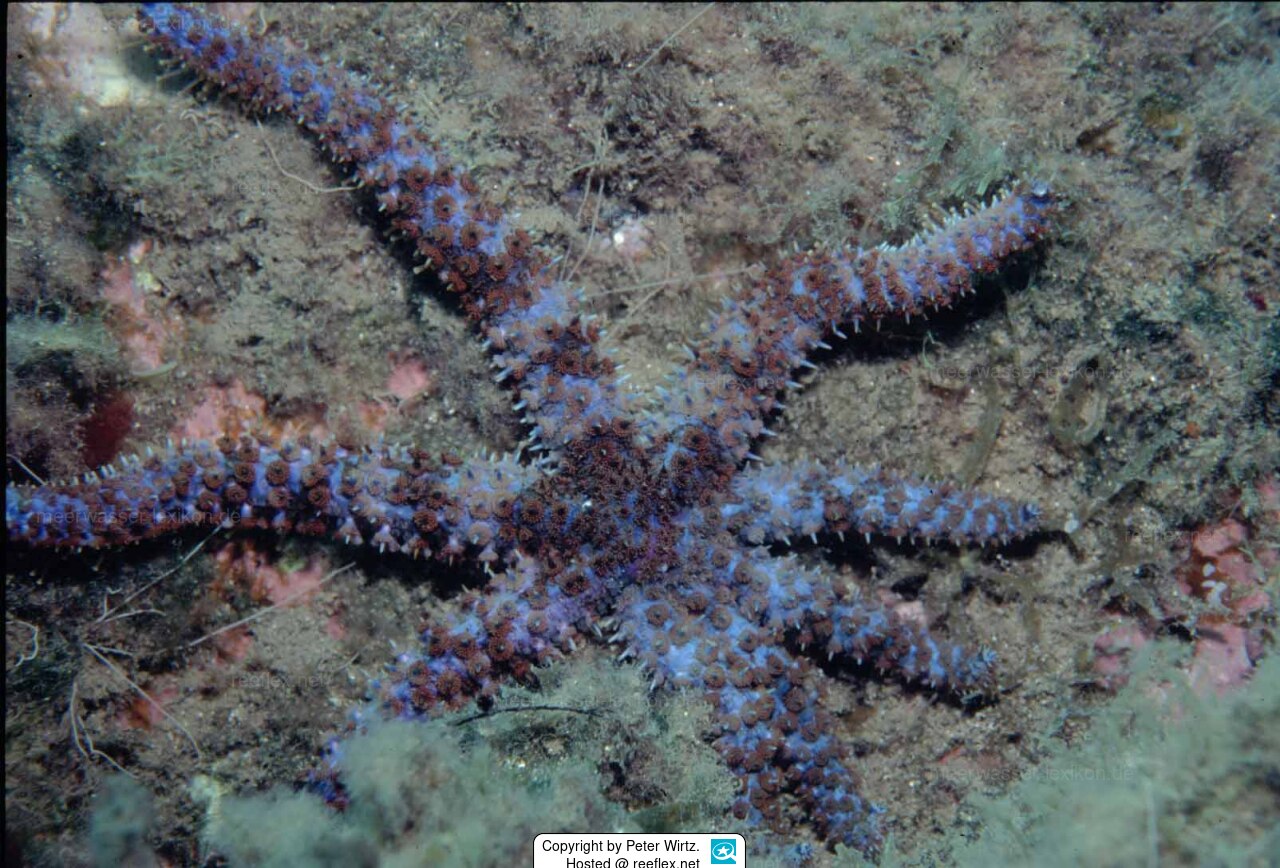
Coscinasterias tenuispina has 6 to 12 arms (usually 7), which are often of different lengths, and reaches a diameter of 20 cm. Its color is highly variable. It has a slightly bluish color, but can also be white, red, or brown with blue, yellow, or brown spots. Coscinasterias tenuispina has a rough texture with short spines.
Coscinasterias tenuispina is a predator and an omnivore. The starfish is found on hard ground and under rocks and algae, where it feeds mainly on other echinoderms and mussels.
We know little about keeping this starfish, but the comments from the keepers say it all. Not a starfish for the community aquarium.
The shrimp Gnathophylleptum tellei feeds predatory on Coscinasterias tenuispina.
Synonymised names:
Asteracanthion tenuispinum (Lamarck, 1816) · unaccepted
Asterias (Stolasterias) tenuispina Lamarck, 1816 · unaccepted
Asterias atlantica Verrill, 1868 · unaccepted (Synonym according to Sladen (1889))
Asterias calamaria var. japonica Döderlein, 1902 · unaccepted (var. japonica is synonym...)
Asterias savaresi Delle Chiaje, 1827 · unaccepted (synonym to Gray (1866))
Asterias tenuispina Lamarck, 1816 · unaccepted (Basionym)
Coscinasterias (Stolasterias) tenuispina (Lamarck, 1816) · alternate representation
Lytaster inaequalis Perrier, 1894 · unaccepted (synonym)
Polyasterias tenuispina (Lamarck, 1816) · unaccepted
Stellonia tenuispina (Lamarck, 1816) · unaccepted
Stolasterias tenuispina (Lamarck, 1816) · alternate representation
Coscinasterias tenuispina has 6 to 12 arms (usually 7), which are often of different lengths, and reaches a diameter of 20 cm. Its color is highly variable. It has a slightly bluish color, but can also be white, red, or brown with blue, yellow, or brown spots. Coscinasterias tenuispina has a rough texture with short spines.
Coscinasterias tenuispina is a predator and an omnivore. The starfish is found on hard ground and under rocks and algae, where it feeds mainly on other echinoderms and mussels.
We know little about keeping this starfish, but the comments from the keepers say it all. Not a starfish for the community aquarium.
The shrimp Gnathophylleptum tellei feeds predatory on Coscinasterias tenuispina.
Synonymised names:
Asteracanthion tenuispinum (Lamarck, 1816) · unaccepted
Asterias (Stolasterias) tenuispina Lamarck, 1816 · unaccepted
Asterias atlantica Verrill, 1868 · unaccepted (Synonym according to Sladen (1889))
Asterias calamaria var. japonica Döderlein, 1902 · unaccepted (var. japonica is synonym...)
Asterias savaresi Delle Chiaje, 1827 · unaccepted (synonym to Gray (1866))
Asterias tenuispina Lamarck, 1816 · unaccepted (Basionym)
Coscinasterias (Stolasterias) tenuispina (Lamarck, 1816) · alternate representation
Lytaster inaequalis Perrier, 1894 · unaccepted (synonym)
Polyasterias tenuispina (Lamarck, 1816) · unaccepted
Stellonia tenuispina (Lamarck, 1816) · unaccepted
Stolasterias tenuispina (Lamarck, 1816) · alternate representation


